| Check | What the article establishes |
|---|---|
| Time to decompose | Leafmould is decayed leaf material; collecting fresh leaves begins a process that can take about two years. |
| Age and purpose | Mature leafmould and younger material have different uses, so age matters alongside the leaf type. |
| Local conditions | Autumn collection does not mean every bed needs mulching immediately: soil moisture, frost and local seasons matter. |
Read the cited evidence: Royal Horticultural Society — Leafmould Royal Horticultural Society — How to mulch with organic matter
Gardening in November can begin with something already on the ground: fallen leaves. For gardens entering autumn, gathering them for leafmould is a way to prepare material for later use rather than expecting an instant finished product. The Royal Horticultural Society's leafmould guide describes it as decayed leaves used to improve soil. Its UK seasonal context should be matched to your own climate; November is not autumn everywhere.
Leafmould: what fallen leaves become
RHS guidance says most leaves take about two years to break down. Oak, beech and hornbeam are among its preferred leaves, while thicker types decompose more slowly and benefit from shredding. Conifer needles can take two to three years.
That timescale changes the purpose of the job. You are starting a supply for a future garden task, rather than making this week's potting material. A bag of newly gathered leaves and a batch that has broken down over several seasons are not interchangeable simply because both came from the same tree.
Keeping stored leaves moist and ventilated
The RHS describes keeping leaves in bags with air holes and loosely tied tops, or in a sheltered enclosure. Dry leaves should be moistened, and the material should not be allowed to dry out. It also advises sorting out litter from collected leaves.
The useful decision is where the material can remain while it changes. Choose a manageable quantity and a place you can check again. The bag and enclosure options offer different ways to organize the job; a dedicated new structure is not the only approach described. This guide does not report a timed trial of different containers or promise a faster result.
Does the age of leafmould change its use?
The RHS distinguishes well-rotted material more than two years old, which has uses in seed-sowing or potting mixtures, from younger or poorer-quality leafmould suitable for mulching and improving soil. It also identifies separate uses for pine-needle material around acid-loving plants.
Read these as distinctions, not as a universal recipe for every plant. Decide what you want the material to do before choosing how to use it. Improving a garden bed and preparing a growing mixture for seeds are different tasks, even when both involve organic matter.
Should you mulch as soon as leaves fall?
Not automatically. In its guide to mulching with organic matter, the RHS generally recommends late winter or early spring while soil is moist, and says to delay if it is very wet or frozen. Collection time and application time are therefore separate decisions.
For border mulching, that guide specifies a layer at least 5 centimetres deep, ideally 7.5 centimetres, while leaving a 10-centimetre mulch-free circle around woody stems. Keeping material away from the base of a shrub or tree matters because damp mulch piled there can cause rotting.
Use the plant, soil and local season to interpret a monthly checklist. The date alone cannot tell you whether your ground is frozen or your plants need a particular treatment. This is a focused explanation of published leafmould and mulch guidance, rather than a complete November maintenance calendar.
Photo credit
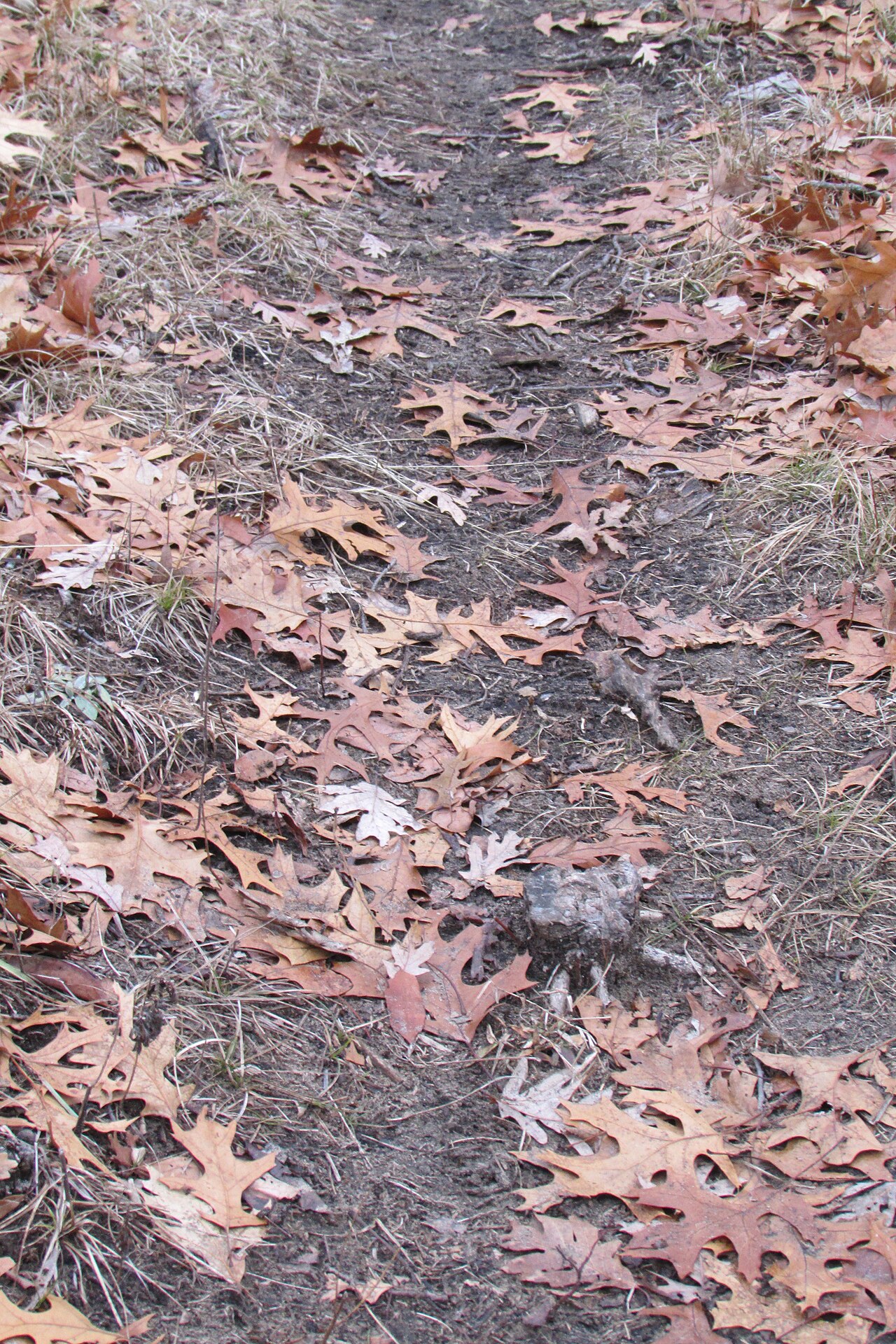
Oak leaf litter 20-01-03 017, by Chris Light, via Wikimedia Commons, is used under CC BY-SA 4.0. The photograph was taken at Stoutsburg Savanna Nature Preserve on January 3, 2020. The provider resized it; display cropping may apply. The image and cropped presentation remain under that license, separately from the article text. It illustrates fallen leaves, not finished leafmould.
FOLLOW THE TRAIL
Sources & further reading
- Royal Horticultural Society — Leafmould ↗
Primary horticultural guidance on leaf types, decomposition times, collection methods and uses of younger versus mature material.
- Royal Horticultural Society — How to mulch with organic matter ↗
Distinct practical guidance on application timing, wet or frozen soil, depth and clearance around woody stems. UK seasonal context applies.
Prepared with AI assistance from two RHS advice guides. This is seasonal guidance, not a newly announced experiment or an independent gardening trial. Plant requirements and local weather may differ from the sources' UK context. The licensed photograph is an illustrative 2020 leaf-litter scene, not a demonstration conducted for this article. Read our editorial policy.
Last updated . Suggest a correction ↗