| Check | What the article establishes |
|---|---|
| Non-rain targets | A rain-radar echo can come from insects or other non-rain targets; a colored patch is not automatically rain at ground level. |
| Extra data | Dual-polarization measurements help distinguish target types by comparing horizontal and vertical properties. |
| Species check | A general explanation of insect echoes does not identify the species behind a particular radar image. |
Read the cited evidence: Bureau of Meteorology — Weather radars NOAA NSSL — Research tools: Dual polarized radar
Rain radar can show an echo even when the target is not a raindrop. Australia's Bureau of Meteorology explains that swarms of insects and flocks of birds are among the things a weather radar can detect. The important distinction is between receiving a signal and deciding what caused it. Understanding that distinction is more useful than treating every unexpected patch as either rain or a broken instrument.
What does a radar actually receive?
Radar transmits short pulses of electromagnetic energy and listens for energy scattered back by targets. NOAA's National Severe Storms Laboratory describes how computers process those returns to infer target properties and motion toward or away from the radar.
The displayed picture is therefore an interpretation of measurements. It is not a camera photograph of falling water. A familiar rain-colored map can make that distinction easy to overlook, because the presentation is simpler than the measurements and processing behind it.
Why can insects produce a misleading-looking patch?
The bureau includes insect swarms, birds and aircraft among possible non-rain returns. It also describes reflections involving fixed objects or unusual atmospheric conditions. These are different explanations for an echo, rather than one universal software fault.
Insects being a possible target does not establish that a specific image shows moths, let alone a particular species or population size. That stronger claim needs evidence about the particular observation. This explainer does not analyze a current scan or verify a new Australian moth-detection event.
What does dual polarization add?
NSSL explains that dual-polarization radar uses horizontally and vertically polarized waves. Comparing the returns provides information about target size and shape, while differences in their correlation help separate precipitation from non-precipitation. The laboratory identifies distinguishing bugs and birds from weather data as one benefit.
Think of this as asking more questions of the same scene. A single measurement can leave several explanations open; additional properties help narrow the interpretation. The term describes a measurement capability, not a promise that every consumer map labels each biological target or that every radar has identical equipment.
Why can the ground still look different?
A non-rain target is not the only explanation. The bureau notes that rain can evaporate before reaching the ground, a phenomenon called virga. It also explains that a radar beam rises farther above the surface with distance and can miss low-level precipitation.
Those cases deserve different descriptions: rain aloft that does not arrive below, shallow rain missed by the beam, and a return from something other than rain. Keeping them separate avoids replacing one mistaken assumption with another. Use the radar alongside other observations, as the bureau advises, rather than expecting a single colored image to answer every question about a location.
Historical photo credit
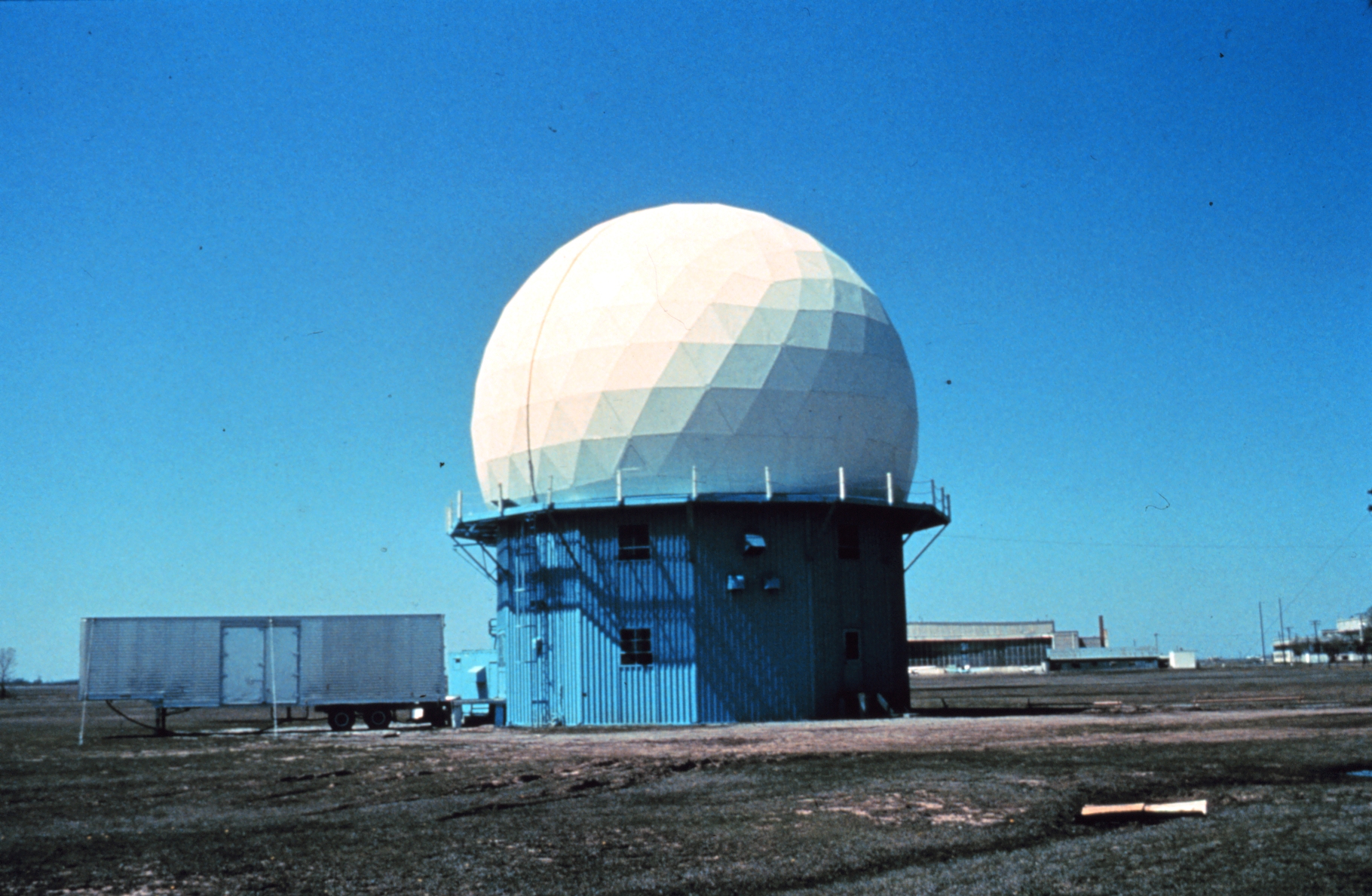
Doppler Weather Radar — NOAA shows NSSL's first Doppler weather radar in Norman, Oklahoma, in April 1973. Credit: NOAA Photo Library, NOAA Central Library; OAR/ERL/National Severe Storms Laboratory. The file page identifies it as a public-domain U.S. government work. The downloaded original is unchanged; display cropping may apply. It illustrates radar equipment history, not a modern Australian installation or a record of insects.
FOLLOW THE TRAIL
Sources & further reading
- Bureau of Meteorology — Weather radars ↗
Primary Australian weather-service explanation of radar returns, non-rain targets, beam-height limits, virga and interpreting radar with other observations.
- NOAA NSSL — Research tools: Dual polarized radar ↗
Primary research-laboratory explanation of scattered radar energy, horizontal/vertical measurements, target classification and separating biological returns from weather data.
Prepared with AI assistance from two official radar-science pages read November 3, 2026 in Beijing time. This is a general explanation of established technology, not a new study, a live forecast or an independently analyzed moth observation. The archive photograph is from Oklahoma in 1973. Read our editorial policy.
Last updated . Suggest a correction ↗