| Check | What the article establishes |
|---|---|
| Where clocks change | The November 1 change applied to US areas that observe daylight saving time, rather than every location worldwide. |
| EST conversion | Eastern Standard Time is UTC−5; a 9 a.m. appointment on that basis corresponds to 14:00 UTC. |
| Meeting check | For an overseas call, verify the appointment's date and time zone instead of reusing a remembered time difference. |
Read the cited evidence: NIST — Daylight Saving Time Rules Time.gov — Official US Time
Daylight saving time ended on November 1, 2026, in the US areas that observe it. The National Institute of Standards and Technology's timetable identifies the transition at 2 a.m. local time. For readers following American colleagues, broadcasts or online events from abroad, the practical question is what that does to the time of the next appointment.
What happened to the repeated hour?
At the autumn transition, 2 a.m. became 1 a.m., so the hour beginning at 1 a.m. occurred twice. A bare clock reading inside that interval is therefore incomplete information: it needs a standard/daylight designation or UTC offset to identify which occurrence is intended.
For an ordinary daytime meeting after the change, the issue is different. You are not choosing between two copies of the morning; you are converting the appointment using the offset now in effect. Keep those two problems separate when checking a confusing timestamp.
How does Eastern time translate into UTC?
The official US time display identifies Eastern Standard Time as UTC−5. A hypothetical appointment at 9 a.m. EST consequently corresponds to 14:00 UTC: add five hours to the local clock reading.
During daylight time, Eastern clocks are one hour ahead of their standard-time setting. The same 9 a.m. local appointment then corresponded to 13:00 UTC. That comparison is arithmetic using the published offset and seasonal one-hour change, not a report that any particular event changed its schedule.
This gives you a useful question to ask the organizer: is the appointment fixed to the local clock, or to a UTC time? A recurring 9 a.m. Eastern appointment and an event fixed at 14:00 UTC describe different scheduling choices. Confirm the dated invitation instead of assuming that either one automatically follows the other.
Does the same adjustment apply everywhere?
No. NIST lists Hawaii and most of Arizona among US places that do not observe daylight saving time, while the Navajo Indian Reservation does observe it. Nor does the US transition date establish the rules for another country.
Start a conversion with a named location and a date, rather than the phrase 'American time.' If two participants are in different places, check each side of the invitation. The useful output is the same moment expressed clearly for both people, not a single time difference memorized for the whole year.
What should you check on a device?
NIST explains that its time services distribute UTC, while a computer's operating system supplies local-zone and daylight-saving corrections. Correct synchronization and correct local display are therefore separate checks.
If a clock disagrees with an invitation, inspect the selected time zone and the appointment's own date and zone before making a manual one-hour adjustment. Keep software current, as NIST recommends. This is a focused time-conversion guide, not a claim that every phone, calendar or older clock updates in the same way.
Illustrative photo credit
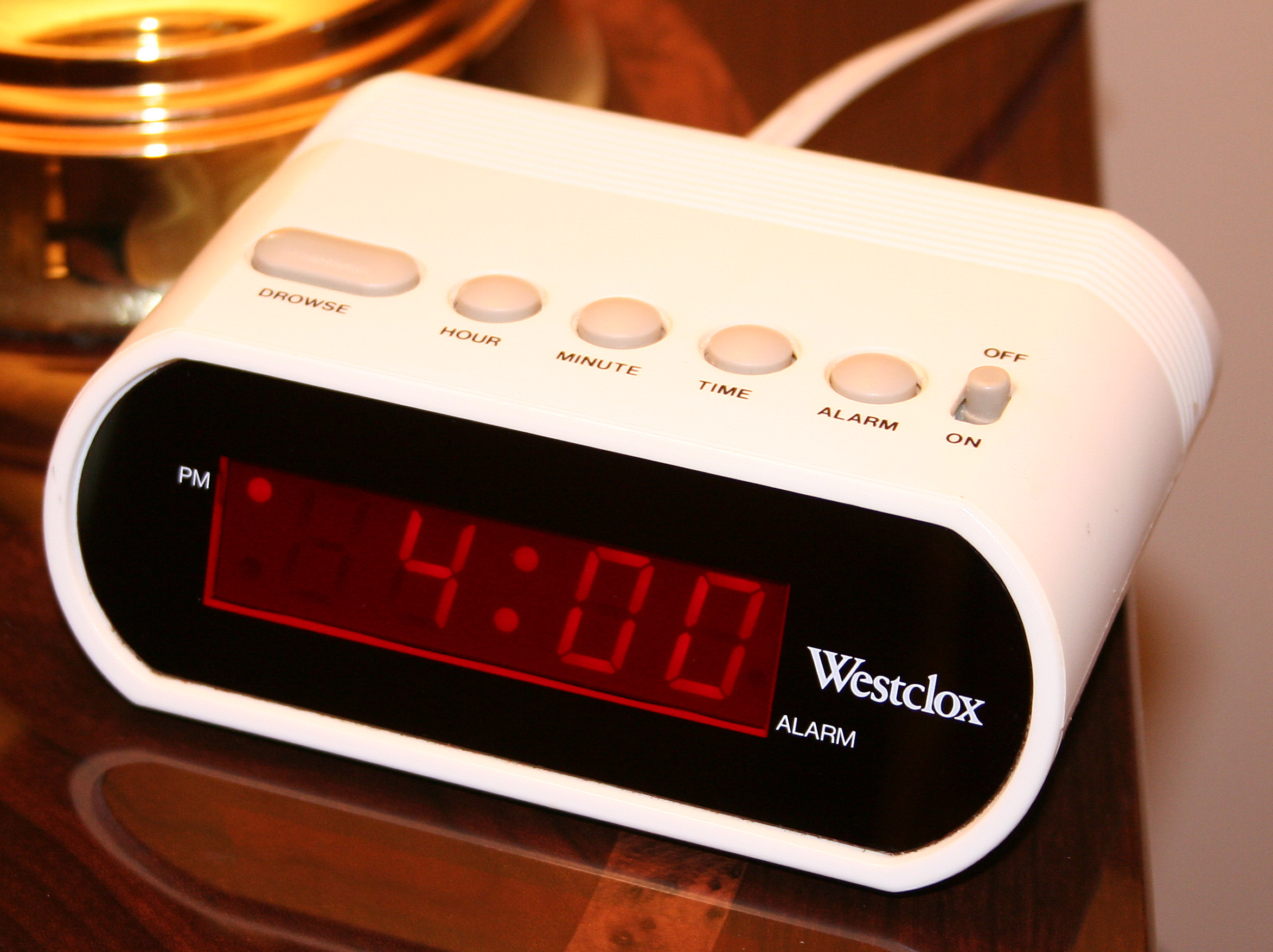
Digital-clock-alarm, by Derek Jensen (Tysto), via Wikimedia Commons, was photographed on September 30, 2005. Its author released it into the public domain. The original file is unchanged; display cropping may apply. It illustrates a clock, not a live time signal or a device tested for this article.
FOLLOW THE TRAIL
Sources & further reading
- NIST — Daylight Saving Time Rules ↗
Primary US timekeeper guidance: 2026 dates, repeated autumn hour, geographic exceptions and separation of UTC synchronization from local software corrections.
- Time.gov — Official US Time ↗
Distinct official display confirming the November 1 change and current standard-time offsets, including Eastern Standard Time at UTC−5. The article's meeting examples are calculations, not event listings.
Prepared with AI assistance from two official timekeeping pages read November 2, 2026 UTC. Meeting times are hypothetical conversion examples. No device, calendar service or event invitation was independently tested. This article covers practical timekeeping and excludes political proposals and health advice. The public-domain photograph dates from 2005. Read our editorial policy.
Last updated . Suggest a correction ↗